
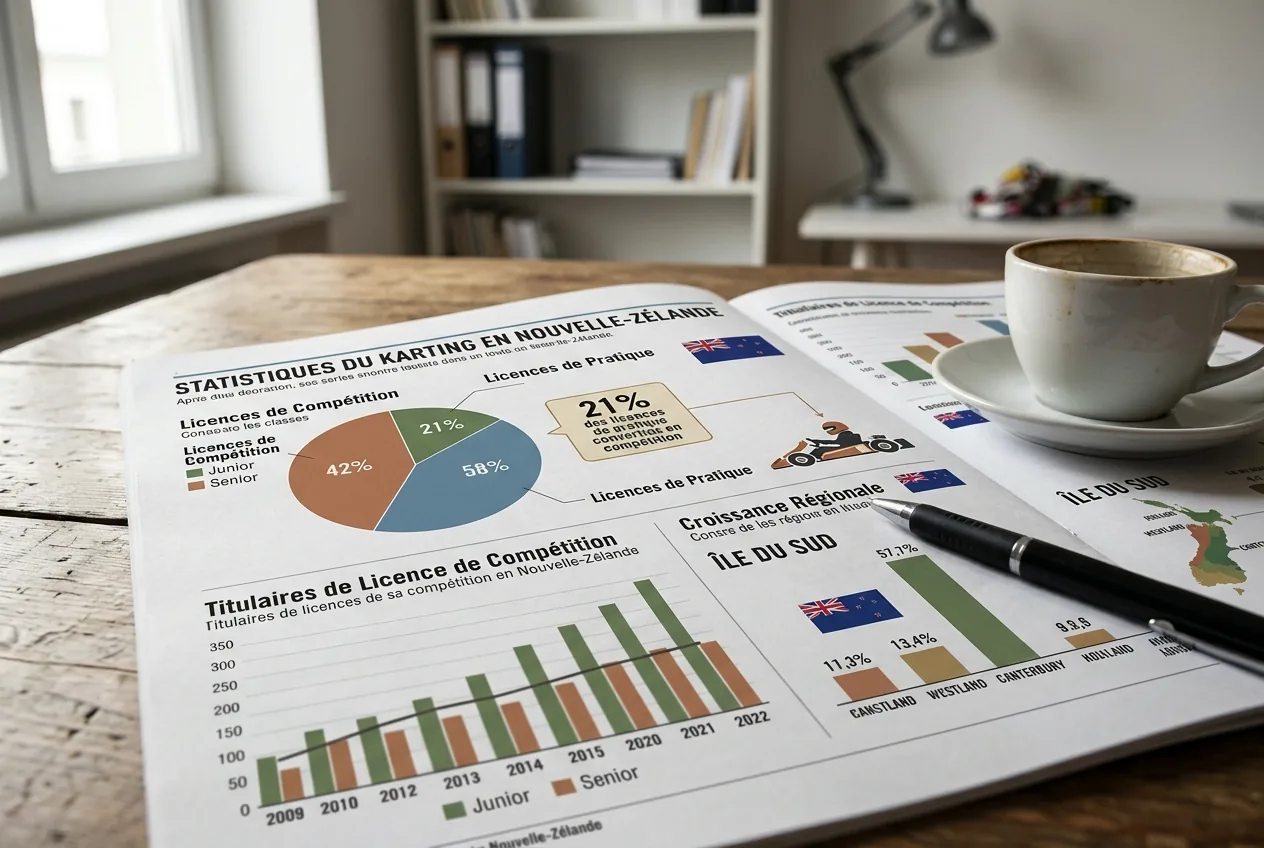
Karting statistics in New Zealand provide a comprehensive overview of the sport’s landscape. The governing body has released a detailed report that outlines membership figures, participation rates, and a breakdown by class and club. This level of detail is unprecedented compared to similar reports from Australia.
Current License Holders
The report indicates that there are currently 1,584 licensed karting participants in New Zealand. This number is notable given the country’s population of approximately 5.3 million. If Australia were to match this per capita figure, it would equate to around 8,300 license holders.
According to the organization, “license numbers have remained stable over the past year, with a slight overall growth.” This suggests a steady interest in karting among New Zealanders, reflecting a healthy sport culture.
Trends in License Types
Interestingly, the report shows a slight decline in senior competition licenses while junior licenses have seen an increase. This trend highlights a growing interest among younger drivers, which is crucial for the future of the sport.
Furthermore, practice licenses have risen for the seventh consecutive year. Remarkably, 21% of these practice licenses transitioned into competition licenses during the year. This conversion rate underscores the need for getting new drivers into karts as a pathway to competitive racing.
Annual Participation Rates
Annual participation in karting events has decreased compared to previous years. This data may be affected by calendar changes, with some statistics expected to appear in next year’s report. Such fluctuations can be common in sports with seasonal activities.
In contrast, the South Island has experienced growth, particularly in regions like Canterbury and Westland. This regional development indicates a positive trend for karting in areas outside the major urban centers.
Impact of Junior Growth
The increase in junior licenses is a promising sign for the sport’s future. Young drivers play a vital role in sustaining interest and participation in karting. Many clubs are focusing on youth programs to nurture talent and encourage families to engage in the sport.
By investing in junior programs, clubs can create a pipeline of skilled drivers ready to compete at higher levels. This proactive approach can help maintain the sport’s vitality and competitiveness.
Key Findings from the Report
- 1,584 total license holders in New Zealand.
- Growth in junior competition licenses.
- Stable senior license numbers with minor fluctuations.
- 21% conversion rate from practice to competition licenses.
- Regional growth in South Island areas like Canterbury.
These findings highlight the dynamic nature of karting in New Zealand and the various factors influencing participation rates. Understanding these trends is crucial for stakeholders aiming to enhance the sport’s appeal.
Looking Ahead
As the karting community continues to evolve, it will be essential to monitor these statistics closely. The insights gained can guide future initiatives aimed at promoting the sport and increasing participation.
Engaging with local clubs and communities will be vital in sustaining interest. Events such as karting events on July 11 and 12 can serve as platforms to attract new participants and showcase the excitement of karting.
In summary, the karting statistics in New Zealand reveal a sport that is stable yet evolving. With a focus on junior development and regional growth, the future looks promising for the sport across the country.